What is ADS-B
ADS-B (Automatic Dependent Surveillance–Broadcast) is a next-generation surveillance technology used in aviation to enhance situational awareness, air traffic management, and flight safety. It enables aircraft to broadcast their real-time position, velocity, identification, and other flight-related data using satellite navigation and onboard avionics.
How ADS-B Works
- Requires no external input from the pilot or air traffic control.
- Relies on onboard GNSS or other sensors to determine position and velocity.
- Provides real-time aircraft tracking for ATC and other nearby aircraft.
- Continuously transmits flight data via radio signals to anyone within range.
Technical Overview
ADS-B data is transmitted over two main frequencies:
- 1090 MHz Extended Squitter (1090ES): Primarily used in commercial aviation and internationally.
- 978 MHz Universal Access Transceiver (UAT): Used mainly within the United States for general aviation.
Each ADS-B transmission includes:
- ICAO 24-bit aircraft address
- Flight ID (Callsign)
- Position (latitude/longitude)
- Barometric and GNSS altitude
- Ground speed and vertical rate
- Heading and track
- Navigation accuracy and integrity indicators
- Emitter category and flight identification
Radio Signals and Propagation
ADS-B transmissions are VHF with line-of-sight radio wave propagation, meaning the signal travels in a straight line and can be blocked by terrain or buildings. The effective range is typically:
- 100–250 nautical miles (185–460 km) dependent on altitude of aircraft and elevation of receiver
- Shorter ranges at lower altitudes due to Earth's curvature and obstructions
Key technical aspects:
- 1090ES uses Pulse Position Modulation (PPM) with a data rate of 1 Mbps.
- Bandwidth: Narrow, allowing low-cost receivers to process signals.
- Time Division: No frequency coordination—aircraft transmit independently every 0.5–1 second.
ADS-B data can be received by:
- Air Traffic Control ground stations
- Other aircraft equipped with ADS-B In
- Independent ground receivers
Regulatory and Legal Context
ADS-B is a globally mandated or recommended surveillance method under ICAO SARPs (Annex 10 and Annex 6) and implemented through regional frameworks:
- EASA (Europe): ADS-B Out is mandatory under EU Implementing Regulation 1207/2011, amended by EU 2020/587, requiring most aircraft over 5,700 kg or faster than 250 kt to be equipped.
- ICAO: Requires aircraft flying in designated airspace to report position at least every 15 minutes (or every 1 minute in distress), which ADS-B can support as part of GADSS (Global Aeronautical Distress and Safety System).
- Worldwide: ADS-B is part of CNS/ATM modernization across all ICAO regions, supported by entities like EUROCONTROL, NAV CANADA, Aireon, and others.
Operational Benefits of ADS-B
- Enhanced Surveillance: Real-time tracking without reliance on primary/secondary radar. Improves situational awareness for both ATC and pilots (with ADS-B In).
- Fuel Efficiency & Emissions Reduction: Better routing minimizes fuel burn and carbon emissions.
- Weather Integration: ADS-B can broadcast FIS-B (Flight Information Services–Broadcast), providing weather data and NOTAMs to pilots equipped with ADS-B In.
- Enhanced Safety: ADS-B improves conflict detection, terrain avoidance, and awareness in both radar-covered and radar-sparse regions.
- Oceanic and Remote Coverage: Satellite-based ADS-B (e.g., Aireon) allows real-time surveillance over oceans and polar regions, previously unreachable by radar.
- Improved SAR and GADSS Compliance: Real-time position tracking supports global search and rescue coordination and airline operational control (AOC) centers.
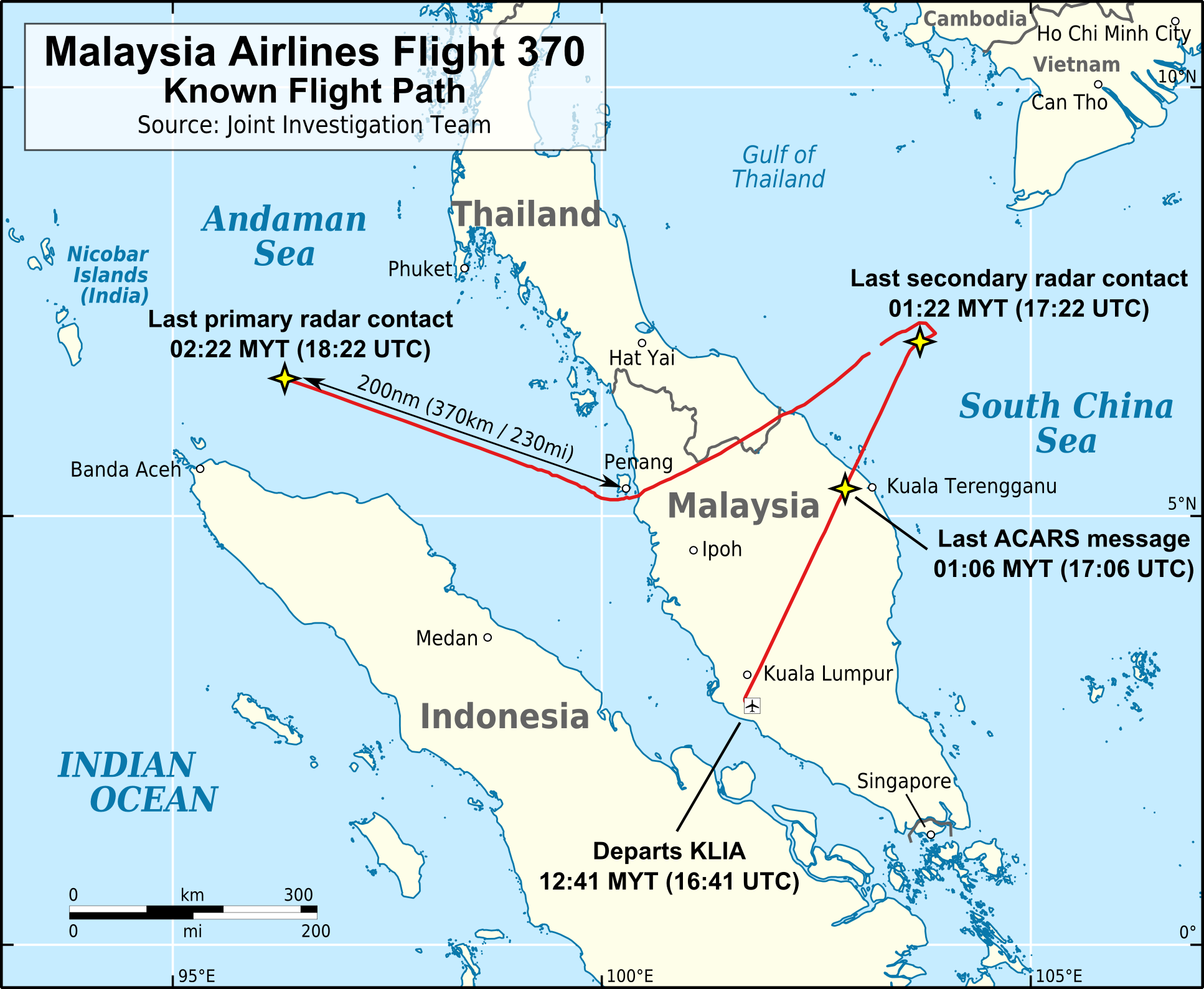
The disappearance of Malaysian Airlines MH370 and Air France AF447 in recent years has resulted in new official rules & regulations (GADSS), which applies to airlines worldwide. Many of them now need to be able to track their aircraft anywhere in the world at any given time.